Mostrando postagens com marcador Facebook. Mostrar todas as postagens

segunda-feira, 22 de agosto de 2022

Facebook remains extremely powerful, but it also faces legitimate problems


Where is the innovation?

In October of last year, my colleague Kevin Roose wrote a column titled, “Facebook Is Weaker Than We Knew.” His hook was a series of stories in The Wall Street Journal, based on internal company documents, which revealed the company’s failure to stop content that damaged teen mental health, spread vaccine misinformation and more.

“It would be easy enough to come away thinking that Facebook is terrifyingly powerful,” Kevin wrote. “But there’s another way to read the series, and it’s the interpretation that has reverberated louder inside my brain as each new installment has landed. Which is: Facebook is in trouble.”

The societal damage that the company was causing seemed to be a sign that its executives were struggling to attract more users and taking desperate measures to do so. Yet Kevin also included a major caveat: The company’s stock had still been rising over the previous year, a sign that investors remained confident.

That’s no longer the case.

The stock has fallen more than 50 percent over the past year. In the most recent quarter, company revenue fell slightly and profits fell 36 percent. Mark Zuckerberg, the chief executive, blamed a broad economic downturn that had reduced spending on digital ads, and it certainly played a role. But the specific problems facing Meta, as Facebook’s parent company is now called, seem to be the main cause.

Consider this chart, with compares Meta, Alphabet (Google’s parent company) and the S&P 500:

Monthly data from Yahoo! Finance, except for August 2022, which is the most recent price.By The New York Times

I know that many readers probably still think of Facebook as a behemoth. And in many ways it still is. As Kevin has written: “It can simultaneously be true that Facebook is in decline and that it is still one of the most influential companies in history, with the ability to shape politics and culture all over the globe.”

This morning, I’ll lay out the four biggest problems facing the company.

1. The age problem

If you have children, you’ve probably noticed that they prefer other social media platforms. To many of them, Facebook is for older people — which is not exactly a recipe for growth. Helen Lewis of The Atlantic, among others, has described the platform as “Boomerbook.”

Yes, many teenagers and younger adults use Instagram, which Facebook bought a decade ago. But even Instagram has been struggling to keep up.

“TikTok is absolutely eating Instagram’s lunch right now, in terms of usage and cultural sway, and advertisers generally want to be where the young people are,” Kevin told me. “Even though Meta has tried to copy TikTok’s most successful features and shove them into Instagram Reels, they’re limited in how much change users will accept without a fight.”

Last month, for example, Kylie Jenner complained to her 361 million followers, “Make Instagram Instagram again.” An anti-Instagram pile-on ensued, as The Times’s Kalley Huang wrote.

2. The innovation problem

“The company just doesn’t appear to know how to invent successful new stuff,” Farhad Manjoo of Times Opinion has written. “Most of its biggest hits — not just two of its main products, Instagram and WhatsApp, but many of its most-used features, like Instagram Stories — were invented elsewhere. They made their way to Facebook either through acquisitions or, when that didn’t work, outright copying.”

That’s a big change from Facebook’s first decade, when it transformed social media. Especially important was its News Feed, which meant users no longer had to spend time searching out other accounts to know what people were posting.

Since the company went public in 2012, it has been much less innovative.

3. The metaverse problem

Zuckerberg feels so strongly that the metaverse — based around world of virtual-reality, or VR — represents the future of the internet that he renamed the company after it.

“It’s been almost a year since Facebook rebranded itself Meta and announced its big push into the metaverse, and there aren’t a lot of big, obvious wins to show for it,” Kevin said. “VR is still pretty niche, and it’s not clear how much usage apps like Horizon Worlds are getting. (Although, if any Meta employees are reading this, I would love to know!)”

When Zuckerberg unveiled parts of the company’s platform last week, critics mocked it as looking dated. He responded by acknowledging it was “pretty basic” and promised “major updates” soon.

One positive sign for the company: It has sold more than 10 million of its VR headsets, which may suggest the niche is growing. But it remains unclear whether VR has anywhere near the mass-market appeal that social media does.

Meta’s VR headset on display at a conference in Paris.Benoit Tessier/Reuters

4. The antitrust problem

Some Meta supporters argue that the company’s recent struggles prove that it isn’t the omnipotent force that its critics claim — and that the federal government should go easy on it. But I think that claim misses what’s really going on.

The company has become less dominant partly because both the Trump and Biden administrations have taken a tougher stance toward mergers.

“If Mark Zuckerberg could acquire his way out of this problem, as he did by buying Instagram back in 2012, he absolutely would,” Kevin said. “But regulators, at least under this administration, aren’t going to let him.”

One example: The Federal Trade Commission, led by Lina Khan, who has called for tougher antimonopoly policies, is trying to block Meta’s acquisition of Within, a VR fitness start-up. Khan and her colleagues worry Meta may be trying prevent future competitors from forming by buying them first.

Depending on your point of view, it’s either ironic or fitting. As Kevin said, “Facebook became so dominant, in part by acting in anticompetitive ways for so many years, that Meta is losing its dominance as a result.”

The bottom line: Facebook remains among the world’s most powerful companies, with the ability to influence elections, public health much more. It also continues to produce huge amounts of revenue, which will allow it many chances to create successful new products. But its struggles are real, and they don’t show any sign of disappearing.

domingo, 28 de junho de 2020

Stop Hate for Profit

Stop Hate for Profit


On June 17th, we asked companies to act against hate and disinformation being spread by Facebook in our campaign, Stop Hate for Profit. We asked businesses to temporarily pause advertising on Facebook and Instagram in order to force Mark Zuckerberg to address the effect that Facebook has had on our society.  


While addressing all of Facebook’s issues and implementing all of our recommendations will take far longer than one month, we wanted to provide clear steps that Facebook could take immediately that would result in real progress. None of these ideas are new, and we hope that Facebook is able to agree and implement the following over the next month: 


Accountability


1. Establish and empower permanent civil rights infrastructure including C-suite level executive with civil rights expertise to evaluate products and policies for discrimination, bias, and hate. This person would make sure that the design and decisions of this platform considered the impact on all communities and the potential for radicalization and hate.


2. Submit to regular, third party, independent audits of identity-based hate and misinformation with summary results published on a publicly accessible website. We simply can no longer trust Facebook’s own claims on what they are or are not doing. A “transparency report” is only as good as its author is independent.


3. Provide audit of and refund to advertisers whose ads were shown next to content that was later removed for violations of terms of service. We have documented many examples of companies’ advertisements running alongside the horrible content that Facebook permits. That is not what most advertisers pay for, and they shouldn’t have to.


Decency


4. Find and remove public and private groups focused on white supremacy, militia, antisemitism, violent conspiracies, Holocaust denialism, vaccine misinformation, and climate denialism. 


5. Adopting common-sense changes to their policies that will help stem radicalization and hate on the platform.


6. Stop recommending or otherwise amplifying groups or content from groups associated with hate, misinformation or conspiracies to users. 


7. Create an internal mechanism to automatically flag hateful content in private groups for human review. Private groups are not small gatherings of friends - but can be hundreds of thousands of people large, which many hateful groups are.


8. Ensure accuracy in political and voting matters by eliminating the politician exemption; removing misinformation related to voting; and prohibiting calls to violence by politicians in any format. Given the importance of political and voting matters for society, Facebook’s carving out an exception in this area is especially dangerous.


Support


9. Create expert teams to review submissions of identity-based hate and harassment. Forty two percent of daily users of Facebook have experienced harassment on the platform, and much of this harassment is based on the individual’s identity. Facebook needs to ensure that their teams understand the different types of harassment faced by different groups in order to adjudicate claims.


10. Enable individuals facing severe hate and harassment to connect with a live Facebook employee. In no other sector does a company not have a way for victims of their product to seek help.


The above are not sufficient, but they are a start. Facebook is a company of incredible resources. We hope that they finally understand that society wants them to put more of those resources into doing the hard work of transforming the potential of the largest communication platform in human history into a force for good.

sexta-feira, 26 de junho de 2020

Facebook will prohibit hate speech in its ads

  • Facebook CEO Mark Zuckerberg on Friday said the company will change its policies to prohibit hate speech in its advertisements.
  • Under its new policies, Facebook will ban ads that claim people from a specific race, ethnicity, nationality, caste, gender, sexual orientation or immigration origin are a threat to the physical safety or health of anyone else, Zuckerberg said. 
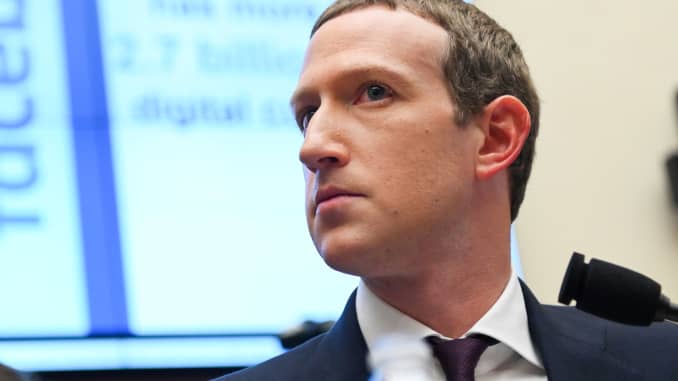
Facebook Chairman and CEO Mark Zuckerberg testifies at a House Financial Services Committee hearing in Washington, October 23, 2019.
Erin Scott | Reuters

Facebook CEO Mark Zuckerberg on Friday said the company will change its policies to prohibit hate speech in its advertisements.

Under its new policies, Facebook will ban ads that claim people from a specific race, ethnicity, nationality, caste, gender, sexual orientation or immigration origin are a threat to the physical safety or health of anyone else, Zuckerberg said. 

“I am committed to making sure Facebook remains a place where people can use their voice to discuss important issues,” Zuckerberg said. “But I also stand against hate or anything that incites violence or suppresses voting, and we’re committed to removing that content too, no matter where it comes from.”

VIDEO01:16
Facebook’s Zuckerberg announces new policies to fight hate speech

Additionally, Zuckerberg said Facebook will do more to protect immigrants, migrants, refugees and asylum-seekers from ads that suggest they are inferior to other groups of people or from ads that express contempt, dismissal or disgust directed at them. 

Zuckerberg’s comments come after nearly 100 brands announced that they would pull their advertising from Facebook for the month of July or longer as part a movement called #StopHateForProfit. That movement protests “Facebook’s repeated failure to meaningfully address the vast proliferation of hate on its platforms.” Zuckerberg did not directly address the boycotts on Friday.

The boycotting advertisers include big spenders like Unilever and Verizon, along with smaller companies like Patagonia, REI, Lending Club and The North Face, according to a running list from Sleeping Giants. The group of organizations behind the #StopHateForProfit movement includes the Anti-Defamation League, the NAACP, Sleeping Giants, Color of Change, Free Press and Common Sense.

Facebook’s stock closed down 8.3% on Friday. 

Additionally, Zuckerberg on Friday announced that Facebook will now label content that it decides to leave up because it is deemed newsworthy and valuable to the public interest, even if it otherwise violates the company’s policies. Facebook users who try to share that content will see a prompt letting them know that the content they’re sharing may violate the company’s policies. Twitter has had a similar policy of leaving up tweets it deems newsworthy, especially tweets from world leaders. Those tweets are labeled accordingly.

“Often, seeing speech from politicians is in the public interest, and in the same way that news outlets will report what a politician says, we think people should generally be able to see it for themselves on our platforms,” Zuckerberg said in a post. 

VIDEO02:05
American Honda joins Facebook ad boycott for July

This decision to add labels comes after Facebook came under heavy criticism by its own employees for refusing to censor or moderate a post from President Trump in late May. In that post, Trump said “when the looting starts, the shooting starts,” in regards to Black Lives Matter protesters. Some Facebook employees said that post was in violation of Facebook’s community standards, which do not allow content that incites violence.

By contrast, Twitter placed a label warning users about the president’s violent rhetoric, which they have to dismiss before they can view the tweet. Twitter is also preventing users from liking or retweeting the tweet.


quarta-feira, 24 de junho de 2020

Para além das fake news

O Globo Logo - PNG e Vetor - Download de Logo
YouTube, Facebook,  WhatsApp funcionam sem terem pedido licença

A mais recente versão  do PL 2.630, relatada pelo senador Ângelo Coronel, contém alguns avanços em relação às versões anteriores mas ainda reúne uma soma de muitos problemas. Não se trata mais de um projeto para "combater desinformação"  conforme se definiam as versões anteriores. É um avanço pelo simples motivo de que,  não sendo possível dar uma definição positiva de "desinformação", qualquer lei, a partir daí, seria, na melhor das hipóteses, inócua, na pior, atrabiliária.

Excluindo esse ponto, começam as dificuldades. Há uma enorme resistência entre os pensadores e formuladores de políticas para a internet em reconhecer que o problema não está em seus usuários, mas nos seus intermediários. E, mais que isto, o problema não está na internet propriamente dita, mas nas plataformas sociodigitais, vulgo "redes sociais", que funcionam sobre a internet.

A internet, em si, é um sistema tecnológico que permite conectar, através de equipamentos e protocolos próprios, dois ou muitos pontos em interação. Sobre esse sistema, nas duas últimas décadas, montaram-se poderosas empresas, ditas "plataformas", que passaram literalmente a organizar e comandar essa interação com finalidades comerciais e lucrativas. Em princípio, numa economia capitalista, não deve haver nada contra o comércio e o lucro. Mas como a sociedade não vive só de comércio e lucro, qualquer atividade econômica está submetida a algum tipo de regulação. Até a loja da esquina precisa, no mínimo, de um alvará da prefeitura para funcionar. Mas o YouTube, o Facebook, o WhatsApp funcionam sem terem pedido qualquer licença para isso...

Quando se fala de uma enorme "loja" frequentada corriqueiramente por cerca de 2 bilhões de pessoas em todo o mundo, ou cerca de 50 a 100 milhões no Brasil, não estamos mais falando da loja da esquina, sequer do conjunto de lojas reunidas num centro comercial. Estamos falando de uma grande cidade, quiçá de um país. As plataformas tornaram-se isso. Nós todos nos encontramos dentro da internet, ou melhor, dentro das suas plataformas, desde o momento em que acordamos e ligamos nossos celulares até o momento em que vamos dormir (isto, se desligarmos os celulares...), assim como também nos encontramos dentro da cidade, mesmo se estivermos guardando distanciamento social sem sair de casa. Por isso, se a vida na cidade é organizada através de suas muitas regulações, inclusive, sublinhemos, as leis de trânsito, a vida nas plataformas (não, na internet) precisa ser também regulada.

Por enquanto, são as plataformas que estão regulando as nossas vidas. Secretamente, opacamente, os seus algoritmos orientam, sem que percebamos, muitas das nossas decisões cotidianas e vigiam – sim, vigiam – cada um de nossos passos. Chega a ser curioso essa gritaria contra o "vigilantismo" quando o maior poder vigilante na nossa sociedade, hoje em dia, é este exercido pelas plataformas. Já existe mesmo farta literatura acadêmica sobre isso. A lei, pois, deve ir para cima delas, não do cidadão.

É mais do que sabido que YouTube, Twitter, Facebook censuram conteúdos. Não é sabido com quais critérios mas, basicamente, eles têm compromissos com os seus anunciantes e, volta e meia, algum conteúdo pode desagradar, por motivos éticos ou outros, a algum anunciante. No momento, porém, que uma empresa de comunicação se põe na condição de filtrar conteúdos que por ela trafegam, essa empresa deixou de ser mero provedor de acesso, tornou-se, por definição, empresa editora. E, no caso, editora por via de algoritmos, sequer por decisão humana...

Reconheçamos, porém, há outra ponta. Um exemplo. Circula pelas plataformas, sem nenhum filtro ou censura, "notícia" de que os hospitais estão matando pacientes, dizendo que morrem de Covid, para vender os seus órgãos. É evidente e odiosa mentira. O objetivo é criar convulsão social. Isto é crime. Se não o for legalmente, deveria passar a ser. Quem replica pode ser facilmente identificado. A fonte original talvez também possa. As plataformas não somente podem rastrear a difusão de mensagens criminosas como podem simplesmente suprimi-las, eliminá-las, de todos os seus servidores, em todo o mundo. A lei, pois, além de muitos outros aspectos necessários à regulação político-econômica dessas plataformas monopolistas estrangeiras, deveria estabelecer muito claramente que elas estão obrigadas a colaborar com as autoridades brasileiras na identificação, rastreamento e punição de atividades criminosas, aqui incluídas as mentiras que visam a desconstituir as autoridades legítimas num estado democrático de direito. Para tanto, não será necessário cadastrar usuário nem quebrar criptografia. A tecnologia da internet permite, muito bem,  às organizações que administram os seus caminhos físicos, isto é, as plataformas, identificar a rota percorrida por qualquer mensagem. Mesmo que essa mensagem tenha tido origem no... Casaquistão.

 Marcos Dantas é professor titular da Escola de Comunicação da UFRJ é  conselheiro do Comitê Gestor da Internet no Brasil


https://oglobo.globo.com/opiniao/para-alem-das-fake-news-24494678